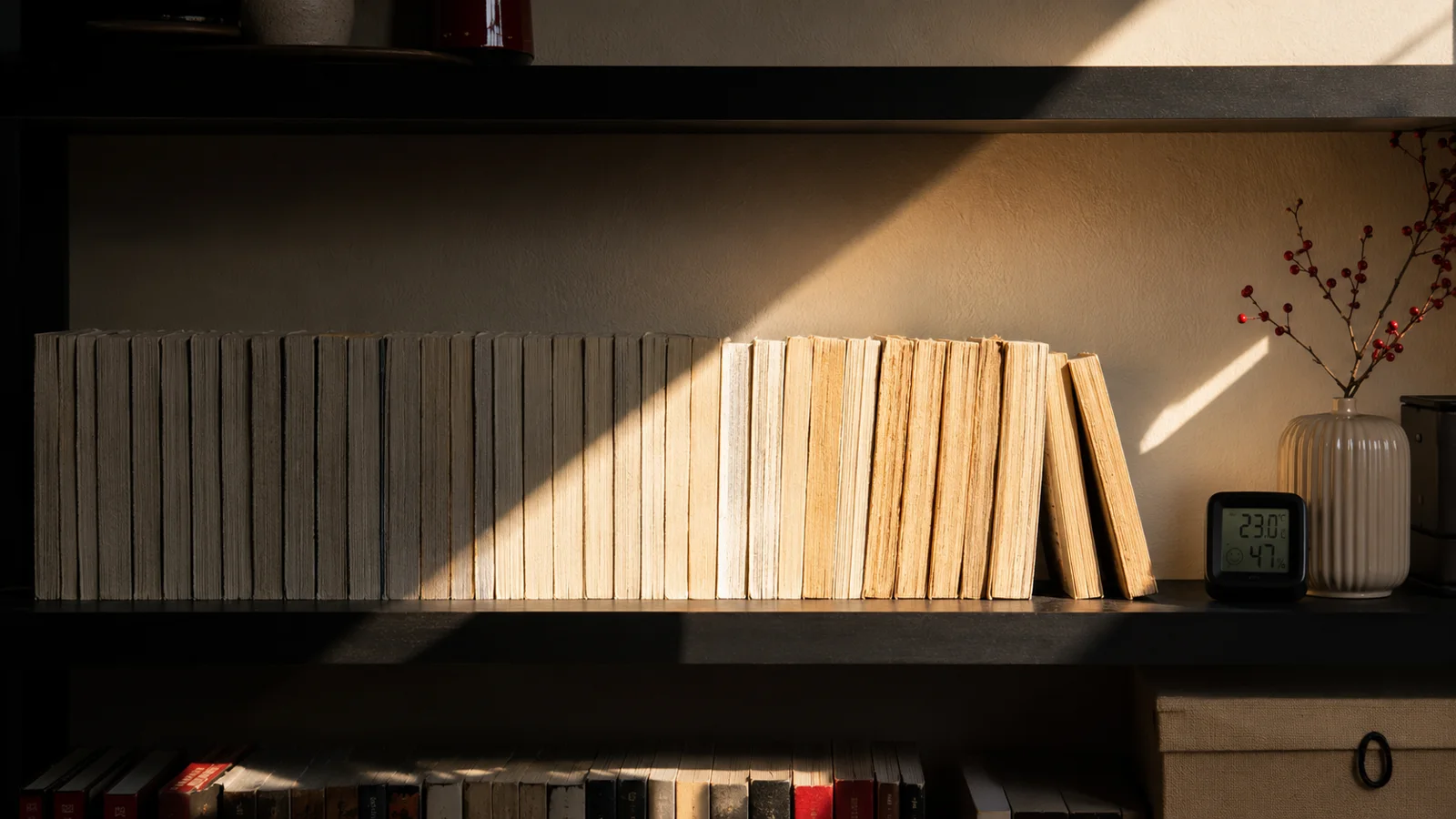
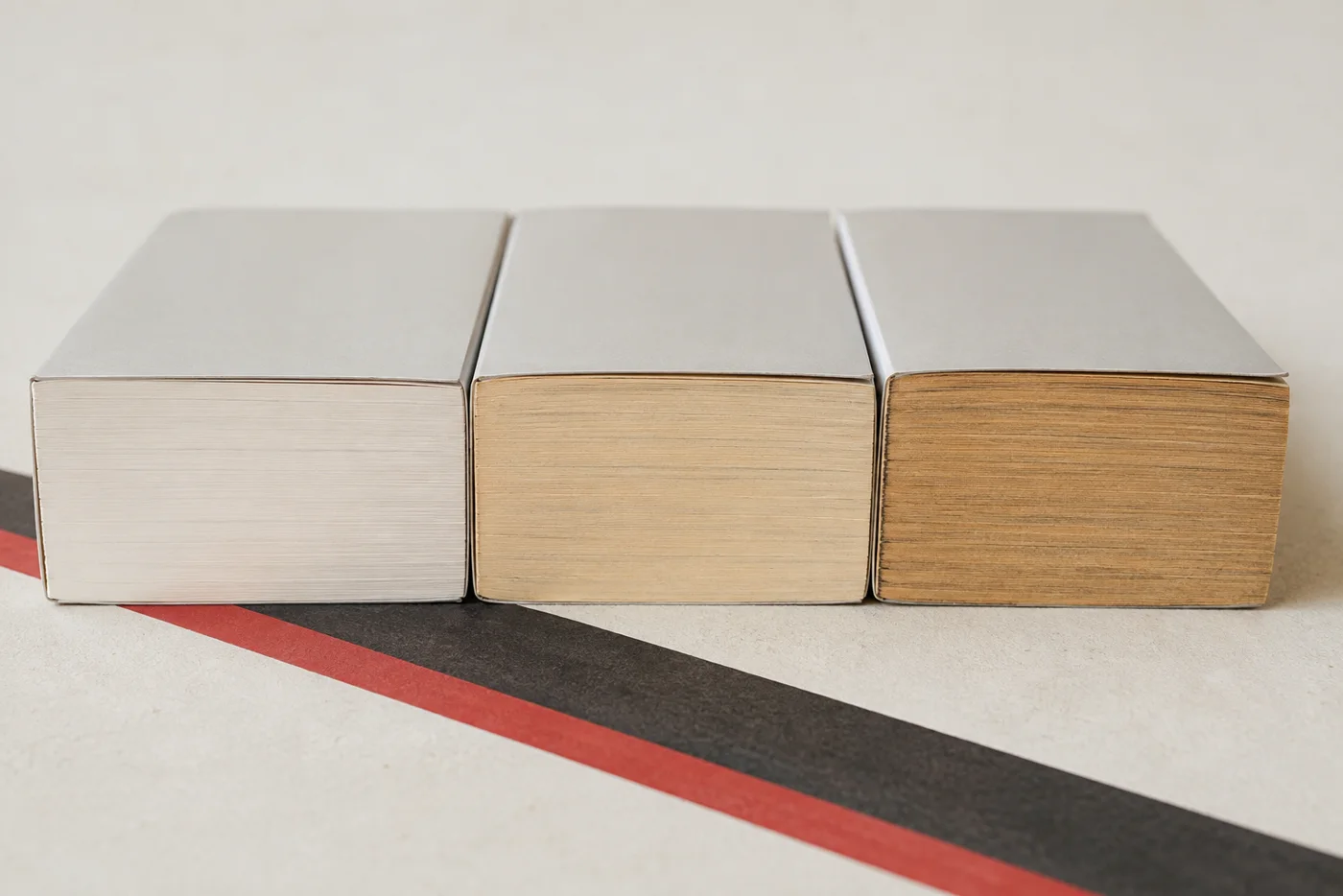
There is a horrible little moment most manga collectors eventually experience. You pull an older volume from the shelf, look at the page edges and realise they are much darker than the book sitting next to it.
The first thought is usually: Did I ruin this?
Probably not. Paper changes as it ages, and many manga volumes are printed on affordable wood-pulp paper rather than paper designed to look brand new for centuries. Some books will yellow faster than others even when they have lived on exactly the same shelf.
But storage still matters. Sunlight, heat, moisture, pollutants and poor handling can turn a slow natural process into a much faster one. The good news is that you do not need to turn your home into a museum. A few sensible changes will do far more than expensive sleeves, gadgets or internet preservation hacks.
The short version: keep manga out of direct sunlight, use the coolest stable room available, aim for moderate humidity, keep books away from floors and damp walls, and support them properly on the shelf.
Why manga pages turn yellow
Paper is mostly cellulose, a material made from long chains of plant-derived molecules. Those chains gradually break down. As that happens, paper loses strength and changes colour.
The Library of Congress explains that moisture and acids can cut cellulose chains through a process called acid hydrolysis. Paper can contain acids from its raw materials and manufacture, absorb pollutants from the air and even produce additional acids as it naturally ages.
Wood-pulp paper can also contain lignin, the material that helps give wood its rigidity. Mechanical pulping leaves more lignin behind than chemical pulping, and lignin contributes to deterioration and discolouration. This is why an old newspaper can become brown and brittle much faster than a high-quality art book.
Then there is light. Paper is vulnerable to both photochemical and oxidative damage. The Canadian Conservation Institute notes that ultraviolet radiation can cause yellowing, weakening and disintegration, while visible light can fade coloured materials. Heat speeds up chemical reactions, and moisture helps acids do more damage.
Collector rule: you cannot change how a volume was manufactured, but you can reduce the light, heat and moisture around it.
This also explains why two volumes from the same series can age differently. They may have been printed at different plants, on different paper stock or several years apart. One may have spent months in a sunny shop window before you bought it. Another might have arrived from the printer and gone straight into a box.
Yellowing is therefore not a perfect measure of how well somebody has treated a collection. It is evidence of ageing, but it is not automatically evidence of neglect.
Sunlight is the easiest problem to fix
If a bright rectangle of sunlight travels across your manga shelf during the day, move the shelf or block the light. That one change is likely to matter more than bagging every book you own.
Light damage is cumulative. It is the combination of intensity and time, so a little direct sun every afternoon eventually adds up. The Canadian Conservation Institute says that the rate of light damage rises with light intensity. Direct sunlight is dramatically more intense than ordinary indoor lighting.
UV-filtering window film can reduce ultraviolet exposure, but it does not make direct sunlight harmless. Visible light can still fade spines and covers, and the sun can warm the books and shelf. Curtains, blinds or simply placing the bookcase on a wall that never receives direct sun are better first steps.
LED room lighting is generally easier on collections than hot lamps positioned close to the shelf, but there is no benefit in lighting books when nobody is looking at them. Avoid display lights that run all day or create warm spots on the covers.
Heat quietly accelerates ageing
The hotter the environment, the faster many chemical reactions occur. That does not mean your manga needs refrigeration. It means the worst storage spaces are usually the obvious ones: hot attics, garages, sheds, enclosed sunrooms, the top of a wardrobe near the ceiling, or shelves beside heaters and air-conditioning outlets.
The US National Archives recommends keeping paper below 75°F, which is about 24°C, where practical. For a normal home collection, consistency is more realistic than chasing a perfect number. A lived-in bedroom or study with a fairly stable temperature is usually a much better home than a space that bakes during the day and cools sharply overnight.
Do not push books hard against a hot external wall. Leave a little space behind the shelf so air can move and so you can spot moisture or pest problems before they spread.
Humidity matters more than most collectors realise
Relative humidity tells you how much moisture is in the air compared with the maximum the air could hold at that temperature. Paper responds to those changes by absorbing and releasing moisture.
Too much humidity encourages mould, attracts pests and can cause pages and covers to swell, ripple or stick. Very dry air can make paper and bindings more brittle. Repeated swings between damp and dry can also stress books as their different materials expand and contract.
For a practical home target, aim for roughly 35% to 55% relative humidity if you can. Do not panic over a brief reading outside that range. The bigger warning is a room that stays above about 60% to 65%, smells damp or changes wildly every day. The National Archives advises keeping paper below 65% RH to reduce mould and insect risk, while warning that extremely dry conditions below 15% can cause brittleness.
Collector rule: a steady, ordinary room is safer than a garage, attic or damp room with large daily swings.
A small digital hygrometer is inexpensive and far more useful than guessing. Put it near the collection, not on the opposite side of the house. Watch the pattern for a week before buying a humidifier or dehumidifier. Sometimes the solution is as simple as improving air movement, closing a window during humid weather or relocating the shelf away from a cold external wall.
Where the bookshelf sits makes a difference
The ideal place is boring: inside the part of the home where people comfortably live.
A good shelf position is away from direct sun, heaters, fireplaces, cooking fumes, bathrooms, leaking windows and exterior doors. Keep the bottom shelf raised from the floor if flooding or cleaning water is remotely possible. The National Archives specifically recommends storing paper on shelves and away from pipes, windows and known leak areas.
Collector rule: keep the shelf slightly away from the wall and inspect the back occasionally for damp, dust or pests.
Basements can be cool but damp. Garages can be dry one week and humid the next. Attics can become extremely hot. A closed cabinet can reduce dust and light exposure, but it does not magically control humidity. If the room is damp, the cabinet will eventually become damp too.
Shelve manga upright, supported and not crushed
Most standard manga volumes should stand vertically. Keep similarly sized books together so they support one another, and use a bookend before the row begins to lean.
The books should be comfortably snug. If you have to drag a volume out by the top of its spine, the row is too tight. Push the two neighbouring books back slightly and grip the volume around the middle instead. Pulling repeatedly on the headcap can damage the spine.
Oversized and very heavy deluxe editions may be better stored flat, particularly if standing them upright causes the page block to sag away from the binding. Keep horizontal stacks short. A tower of heavy hardcovers may flatten or mark the book at the bottom and becomes awkward to handle safely.
The National Archives book-care guidance recommends storing similarly sized volumes together, keeping ordinary books upright and placing large volumes flat.
Do plastic manga bags stop yellowing?
Not by themselves.
A clear bag can protect a manga volume from dust, greasy handling, abrasion and a small accidental splash. It cannot cool a hot room, lower humidity or block all damaging light. A bagged book sitting in direct sun is still a book sitting in direct sun.
If you want to use sleeves, choose a product made from stable, uncoated polypropylene, polyethylene or polyester/PET. These materials are widely used in conservation. Avoid soft PVC or vinyl sleeves, unknown plastics, strong chemical smells and bags that become sticky, cloudy or brittle.
Do not seal a damp book inside plastic. Do not assume tighter is better, either. A sleeve that compresses the cover or catches every time the book is removed can create more handling damage than it prevents.
There is another reason not to treat bags as magic. The Library of Congress notes that paper creates acidic degradation products as it ages, and closed airtight environments can retain them. That does not mean every manga bag is harmful. It means the storage environment still does the real preservation work.
My view is simple: bag books if you like the dust and handling protection, especially rare or delicate volumes. Just do the shelf, light and humidity work first.
Cleaning manga without damaging it
Dust is not only cosmetic. It can hold moisture, contain pollutants and give insects somewhere undisturbed to live.
Every few months, remove books in manageable sections and wipe the empty shelf with a dry or barely damp microfibre cloth. Let the shelf dry completely before replacing anything. Use a clean, soft brush to move loose dust from the top and page edges, brushing away from the spine.
Avoid household cleaning spray, alcohol, scented wipes, oils and water directly on covers or page edges. Do not sand yellowed edges. It removes paper, changes the shape of the book and cannot reverse the chemistry happening inside the pages.
Food and drinks should stay away from the shelf. Crumbs and sugary residue are much more attractive to pests than the manga itself.
What to do if you find mould
A musty smell, fuzzy growth, unusual spotting, damp covers or wavy pages deserve attention. Isolate the affected books from the rest of the collection and fix the moisture source immediately.
Do not aggressively brush active mould around the room. That can spread spores over nearby books and into the air. Drying the environment is the first priority. For a valuable, rare or heavily affected volume, speak to a paper or book conservator rather than experimenting with bleach, vinegar, heat or direct sun.
If several books are affected, treat it as a room problem rather than a book problem. Check the wall, carpet, windows, air conditioner and the back of the bookcase for moisture.
Can you reverse yellowing?
There is no safe home treatment that turns aged manga paper permanently white again without risk.
Bleach and peroxide can weaken paper, alter inks and create uneven results. Sanding only removes the outermost discoloured fibres. Leaving a book in the sun may visually bleach some colour while causing more photochemical damage. These treatments can make a collectible book look worse and age faster.
The realistic goal is to slow further change, not erase the book's history.
A realistic manga-preservation plan
You can improve most collections in less than an hour:
- Check whether direct sunlight reaches the shelf at any point during the day.
- Move the collection away from heaters, vents, damp walls and possible leaks.
- Put a small hygrometer near the books and watch it for a week.
- Stand normal volumes upright with enough support to prevent leaning.
- Lay oversized, heavy editions flat in short stacks if their bindings sag.
- Dust the shelves and inspect second-hand books before adding them.
- Keep food, cleaning sprays and mystery plastics away from the collection.
After that, enjoy the books. Manga is meant to be read, and careful use is not the enemy of preservation. Clean hands, a supported spine and a sensible shelf will protect a volume far better than owning it in constant fear.
Some yellowing will happen. It does not mean your collection has failed. It means the paper is ageing. Your job is simply to make sure it does so slowly.
Sources and further reading
- Library of Congress: The deterioration and preservation of paper
- Library of Congress: Collections care
- US National Archives: Storing family papers and photographs
- US National Archives: Preserving books
- Canadian Conservation Institute: Light, ultraviolet and infrared
- Canadian Conservation Institute: Incorrect relative humidity
- Canadian Conservation Institute: Products used in preventive conservation