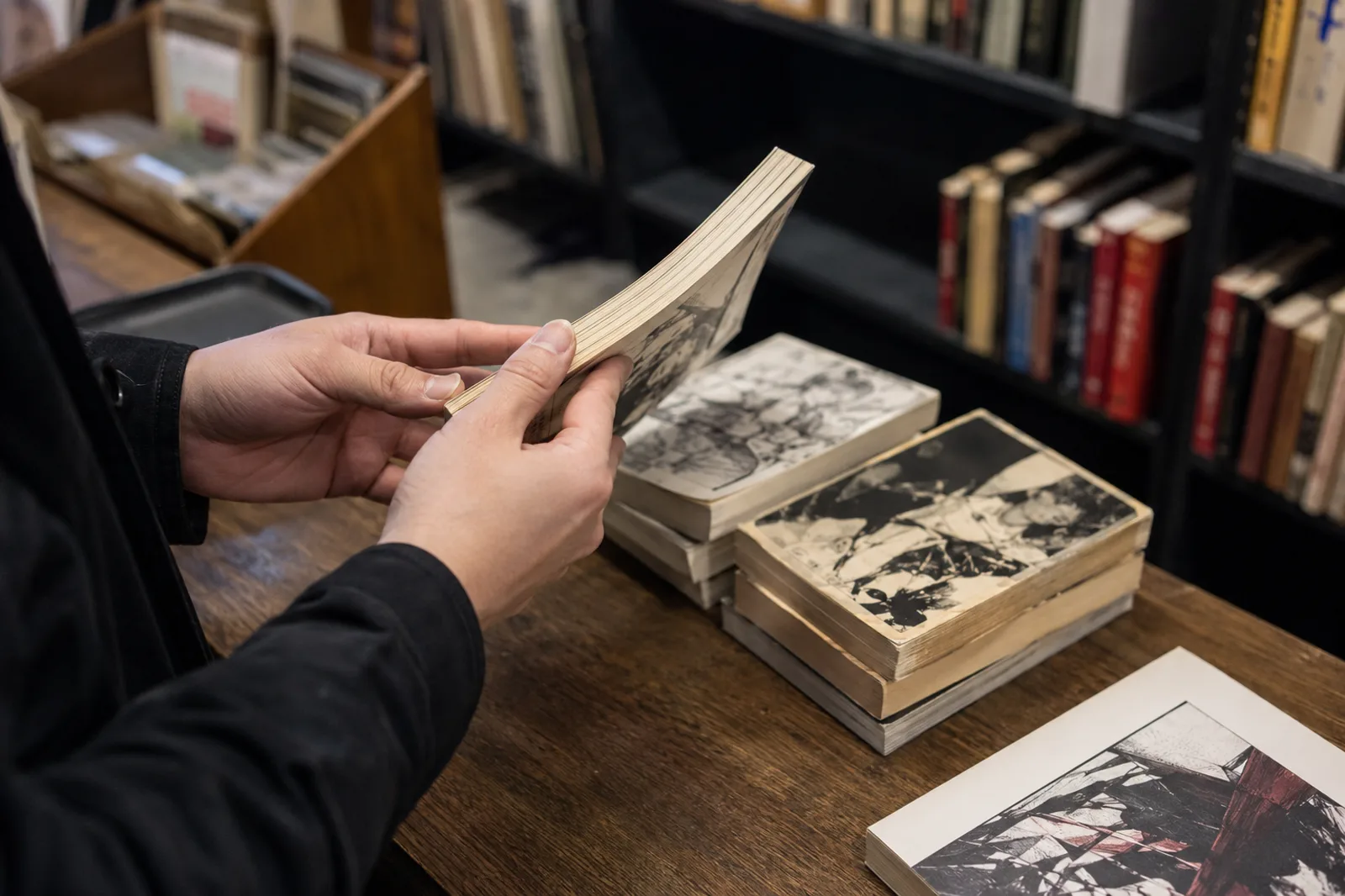
A cheap manga lot can be the best purchase you make all year. It can also be a box of sun-faded, smoke-soaked books with three missing volumes and a seller who suddenly stops replying.
That uncertainty is the price of shopping second hand. Used manga can make long, out-of-print series affordable and turn somebody else's shelf clear-out into your next complete run. The books, however, do not pass through a universal grading system. One seller's “very good” is another collector's reading copy.
The solution is not to avoid used books. It is to stop buying a description and start buying the exact copies shown in the listing.
The short version: decide what condition you will accept, inspect the actual books rather than stock photos, ask directly about odours and water damage, verify the edition and ISBN, and price the set according to its flaws and missing volumes.
Decide whether you want a reader copy or a collector copy
Before opening a marketplace app, decide what job the book needs to do.
A reader copy needs to be complete, clean enough to handle and structurally sound. Yellowed edges, a small crease, a remainder mark or an old price sticker may not matter. This is often the sensible target for an expensive out-of-print series you mainly want to read.
A collector copy has a stricter job. You may care about matching spine logos, an intact dust jacket, sharp corners, even page colour, first-print details or a box with every original extra. Cosmetic defects that do not affect reading can still affect your willingness to buy.
Neither standard is more correct. Trouble begins when you pay collector-copy money for a reader copy because you never defined the difference.
Used manga condition grades are not measurements
Words such as Like New, Very Good, Good and Acceptable are useful shorthand, but they are not a promise that every seller applies identically. Large marketplaces publish condition definitions, independent shops write their own and private sellers often grade by instinct.
Treat the grade as the opening line of the conversation, not the conclusion.
Collector rule: if a defect would change your decision, ask the seller about it directly before paying.
The AbeBooks guide to book conditions is a useful reference because it separates ordinary shelf wear from more significant faults and expects ex-library status and remainder marks to be disclosed. Even then, a photo and a specific description tell you more than a single adjective.
Inspect the book in layers
When photographs are clear, work from the outside in.
Cover, corners and spine
Look for bent corners, creases, peeling laminate, dents, tears and colour fading. A spine can be lightly rubbed and still be perfectly sound. More important is whether it is split, twisted, deeply creased or separating from the page block.
Compare all the spines in a set. Uneven fading may mean one side faced a window. A changed publisher logo may simply indicate different printings, but it can matter if you want a visually matching run.
Page edges and binding
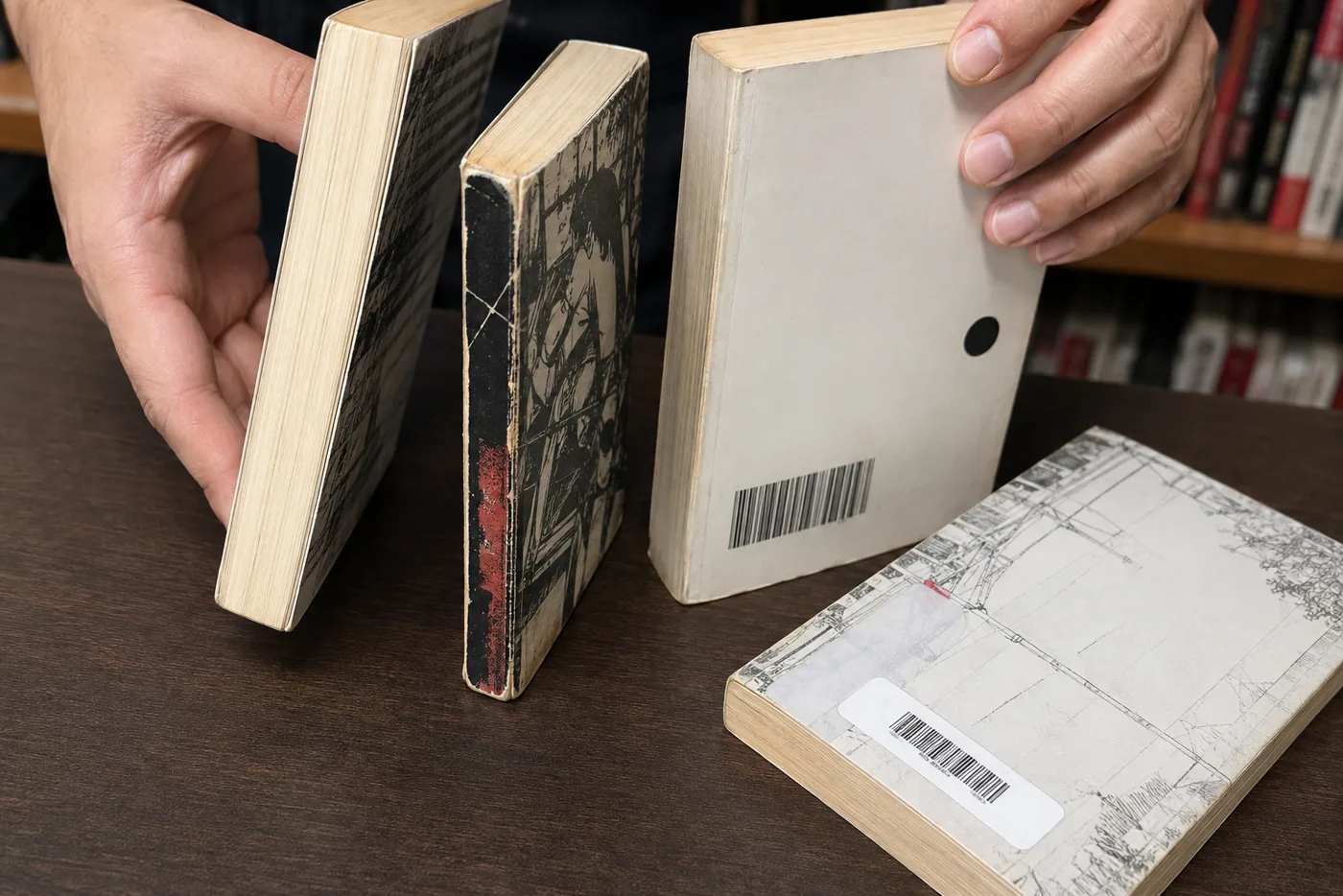
Ask for the top, bottom and fore edge of the books. These views reveal yellowing, spotting, marker lines, dirt and water tide marks that a neat row of spines can hide.
Ask whether any pages are loose, missing, torn, stuck together or marked. Check whether the cover opens squarely and whether the page block is pulling away from the spine. A small paperback does not have to look untouched, but every page should be present and the binding should survive normal reading.
Writing, stickers and repairs
Names inside the cover, price labels, library stamps, tape and home repairs may be acceptable to you. They still need to be disclosed. Removing an old sticker can lift ink or laminate, so do not assume every label will come away cleanly.
Yellowing is normal; staining is different
Paper changes colour as it ages. Manga volumes printed years apart may yellow at different rates because of paper stock, printing plant, storage and exposure to light. Cream-coloured page edges alone do not prove neglect.
Judge yellowing by degree and by what accompanies it. Even colour on flexible pages is usually cosmetic. Dark spotting, waviness, tide lines, stuck pages, brittleness or a damp smell point to a different problem.
Our guide to stopping manga from yellowing explains the preservation side in detail. When buying used manga, the practical rule is simpler: do not pay a bright-white premium for an older book without seeing its page edges, and do not reject a sound reading copy just because its paper has aged naturally.
You cannot photograph a smell
Smoke, mildew, heavy perfume and pet odours are among the hardest defects to judge online. They can transfer to your hands, shelf and nearby books, and removing them is slow and uncertain.
Ask plainly: Has this been stored in a smoking home, a basement, garage or other damp space? Is there any musty, smoky, pet or fragrance smell? A careful seller will understand why the question matters.
A musty odour is not a diagnosis, but the Northeast Document Conservation Center notes that it often indicates high humidity and possible past mould or mildew. If photographs show fuzzy growth, unusual spotting or water damage, do not add the book to your shelf and hope for the best. Valuable books may require professional conservation; ordinary replaceable copies are often better left behind.
If you are sensitive to smoke or fragrance, make that a non-negotiable condition before buying. “It will probably air out” is not a reliable purchase plan.
Ex-library manga can be a bargain—with visible history
An ex-library copy is not automatically a bad copy. Libraries may reinforce covers and bindings, and a retired book can be a durable, inexpensive reader.
Expect stamps, barcodes, security strips, labels, laminated covers, tape or evidence of a removed card pocket. Ask whether the library markings are on the outside, inside or both. Check for missing pages, heavy glue, trimmed edges and repairs that prevent the book from opening normally.
Most importantly, price it as ex-library. Those permanent marks usually reduce collector appeal even when the story is completely readable. A listing that hides library stamps until the final photo is telling you something about the seller as well as the book.
A remainder mark is not a counterfeit mark
Publishers and distributors sometimes mark overstock sold through remainder channels. On books, that often appears as a black dot or short line on the top or bottom page edge. The book may otherwise be unread.
A remainder mark should be shown and reflected in the price, particularly for a collectible copy. It does not by itself mean the book is damaged, fake or defective. Do not confuse a small intentional mark with widespread mould spotting or a marker line used to hide another stain.
How to spot fake manga without chasing myths
Counterfeit manga exists, especially in online listings for complete series and box sets. The answer is verification, not panic.
There is no single visual defect that proves a book is fake. Legitimate print runs can have off-centre spines, slightly different paper colour, changed logos and minor print variation. One crooked logo is weak evidence. A suspicious seller, copied photographs, an edition the publisher never released and an ISBN that does not match are much stronger evidence together.
Start with the publisher's official catalogue. Confirm that the English edition exists in the advertised format and that the volume count, box artwork and included extras make sense. The International ISBN Agency explains that an ISBN identifies a specific publication, edition and format. Search the ISBN on the back cover and compare the result with the title, publisher and binding in the listing.
For an expensive set, request a clear photograph of one copyright page. Check the publisher or imprint, ISBN, printing information and manufacturing details against a confirmed genuine copy or official listing. Look at interior print quality and trim size, but treat these as supporting clues rather than magic tests.
Collector rule: compare the listing with the publisher's official edition, not with another marketplace listing.
Red flags in a suspicious listing
Pause when several of these appear together:
- The listing uses only stock images or publisher mock-ups.
- The seller refuses to photograph the actual spines, backs or copyright page.
- The description says only “English version” without naming a publisher or ISBN.
- A supposedly complete, sealed box set is dramatically cheaper than ordinary sold prices.
- The account has little history, poor feedback or many identical “used” sets.
- The dispatch location, seller location and product description contradict one another.
- The number of books or included extras does not match the official set.
- The seller is evasive about returns, authenticity or where the books came from.
A low price is not proof of a fake. People clear shelves, shops liquidate stock and genuine bargains happen. It is a reason to slow down and verify more carefully.
The exact photos to request before buying
For a single inexpensive volume, two or three clear images may be enough. For a large set, ask for:
- Every spine in one readable photograph.
- The top, bottom and fore edges of the page blocks.
- The front and back covers, including corners.
- A close-up of any stated damage, stickers or writing.
- The barcode and ISBN on representative or uncertain volumes.
- A copyright page from an expensive or suspicious edition.
- One interior page to show print quality and staining.
- The box from every side and all advertised posters, booklets or extras.
You do not need to interrogate an honest seller. A short, specific message works:
Hi, I am interested in the set. Could you please send photos of the page edges, back covers/ISBNs and any damage? Can you also confirm whether there are any smoke, musty or strong fragrance smells, loose or missing pages, library markings or water damage? Thank you.
Save the response inside the marketplace. If the item arrives materially different, that written description helps establish what was promised.
Work out the real price, not the headline price
Compare completed or sold listings for the same edition and similar condition. Active asking prices only show what sellers hope to receive.
Then add postage, import tax, replacement boxes or extras, and the cost of filling gaps. A 20-volume lot missing three scarce middle volumes may cost more to complete than a cleaner full set. Conversely, yellowing and shelf wear can make a complete reading set excellent value when the price is honest.
Out of print does not automatically mean valuable. Demand, scarcity and condition all matter. “Rare” in a listing title is a claim, not evidence.
Set your walk-away price before bidding. Auctions turn minor savings into emotional decisions remarkably quickly.
Buying in person is easier—but still inspect
In a shop, smell the book discreetly, look across the top edges, open it gently in several places and check inside both covers. Do not force a tight spine flat. Count the volumes in a bundle and confirm the edition before reaching the till.
Ask about the shop's return policy. A reputable second-hand seller may grade conservatively and disclose faults, but the five minutes you spend checking are still worthwhile.
When the parcel arrives
For a high-value purchase, record the sealed parcel and unboxing in one continuous video. It is not a guarantee in every dispute, but it documents the package, contents and immediate condition.
Inspect promptly. Confirm the volume count, ISBNs, smells, page condition, box and extras while the return window is open. Keep the packaging until you are satisfied.
If the books appear counterfeit or materially not as described, stop negotiating outside the platform and use its formal return or buyer-protection process. For example, eBay's counterfeit-item policy prohibits counterfeit goods. Read the rules of the marketplace you actually used because deadlines and evidence requirements vary.
Record what you bought while the details are fresh
Once a used book passes inspection, add the exact edition to your collection record. Condition, purchase price, purchase date and a short note such as “remainder dot” or “ex-library stamp” will be useful if you later upgrade, sell or insure the copy.
In TankoVault, the exact ISBN and edition keep an older paperback separate from a newer omnibus or deluxe release. Collection records can include private condition and purchase details, while missing volumes can stay on your Wishlist instead of becoming another accidental duplicate. Barcode and cover scanning help when you are cataloguing a second-hand haul, and Collection Completion shows the released gaps in the edition you are actually collecting.
That record does not make the purchase safer retroactively. It does make the next purchase easier to judge.
The used manga checklist
Before paying, ask yourself:
- Am I buying a reader copy or a collector copy?
- Have I seen photographs of the actual books and their page edges?
- Did the seller answer directly about smoke, mustiness, water and missing pages?
- Are library marks, remainder marks, writing and repairs disclosed?
- Does the ISBN match the advertised publisher, edition and format?
- For a box set, do the volume count and extras match the official release?
- Have I compared sold prices and included delivery plus missing volumes?
- Does the marketplace give me a clear return route if the description is wrong?
Used manga should feel like treasure hunting, not gambling. Accept normal ageing when the price reflects it, be strict about undisclosed damage and remember that the best bargain is a book you are still happy to own after opening the parcel.